Illustration Friday [contagious]
Some time ago I participated in a Book for UNESCO in Brazil... the High School students wrote the short histories about many things... I liked drawing some 'cobras' for several of these histories...
Friday, May 28, 2010
Thursday, May 20, 2010
Blue Filmmysore Mallige
Illustration Friday [Parade]
Well, now we have, and I Maja Jancic, the group that was migrated to Facebook and now there is also on Flickr. Now we have few members but the amount of work is far superior and not just restricted to a few States, it seems the right direction.
Wednesday, May 5, 2010
Make Up Artist Bälte
my new website - layout roughs
setting the table
tell a little 'the path to this shortlist reasoned
Starting again ... I had already finished writing a little problem when I used to write the application that made me lose it all ... even guys like me, fairly sailed in things digital, are not excluded by mishaps of this kind. Motivated by the call to
Adriano Bimbi, which should soon come to Brazil to deal with the opening of an art school in Joinvile, Santa Catarina, I undertook to write a brief commentary on the state of the art shortlisted in Brazil. In this intention I glimpsed an interesting thesis ... love and passion of many Brazilian artists dear to me, to the poetic technique.
In this short guide I try to explain my vision on the art Brazilian geared primarily on a key type of social and anthropological as well as what I first called the 'poetic technique'. Perhaps to explain this vision I wrote about my current projects, many of them marked on the technique and its tools [ my current projects ].
Internet and social networks with thousands of images of artists, photographers, illustrators, etc.. and you could say that Flickr, now surely is the first stretch of more rational images of the world. Already
Facebook, I find it useful to know and get in touch with artists and institutions, often also present in Flickr, but in a more easy and simple. Twitter and LinkedIn are useful to convey ideas, works and also get in touch with the professionals of (applied or not).
Many years ago (1986 maybe ...), I was still at the academy and I had an interesting discussion with Yuji, who was himself a student of Children, about art and its tools could evolve ... I remember talking about an artist working with light [ Picasso ] ... I like to think today and how things a bit 'are similar to what we discussed. Since returning to Brazil in 2008, this idea I have indicated a possible area of \u200b\u200bresearch, initially just outlined in this post [ digital painter?! ], but now much better defined in a number of projects exemplified here [
digital painting projects ]. I recently did a search on the state of the art nell'Web in Brazil and I found this interesting work of Fabio Nunes. [ Web Art in Brazil ]
Brazilian Sketches on the Art History major
events
not to write something I thought had written simply to provide some references on the history of sull'web present in Brazil with some hints mine.
History of Brazil
[
version
,
Di Cavalcanti and Candido Portinari are emblematic in this sense. Indio Caboclo: African: To understand Europeu art in Brazil and the Americas, you have to deal with the social and anthropological origins of our people, the book
Darcy Ribeiro, O Povo Brasileiro "is symbolic and shows us how India, caboclo , the black man, the colonizer have shaped our culture, our traditions and customs. It is interesting to see the universe illustrations of many of our artists and many references to indigenous African culture, not only because this is a fact and yes iconographic representation of this universe mystical little understood by their artists, but that is inherent and ever present. Many times there is no need of mental processes, or studies to be part of them ... are in the air, so to speak ... For many indigenous cultures, the iconography has a divine meaning which connects the real world beyond that of the [indigenous to understand the universe that is very interesting
map]. A documentary made in the '90s by TV Cultura in Sao Paulo Brazilian universe with a key in the work of Darcy Ribeiro is a must see, unfortunately, the documentary is in Portuguese ... but in many cases the pictures tell more and so I commend the vision. I found a reference to this documentary on the internet, are divided into parts [the video "O Povo Brasileiro "].
time ago I started to think of a research on the iconography indigenous and watching some Brazilian artists see to it that directly call or contamination, the latter very common due to our syncretism ... I find that the artist Francisco Galen produces this kind of iconographic syncretism in his work [
advertisement video to Galen ].
The Xilo in the north and northeast Brazil and in the south by the "Clube da Gravure" To better understand this syncretism in praxis, we must look at the craft of the North and Northeast regions of Brazil and especially the woodcut, where many times Symbols and naif solutions do so with many of these artists, artisans are considered real artists now. I find it interesting to examine this aspect Brazilian art, primarily for improvising solutions and tools used ... in this sense much of what are the traditions and indigenous art were sent to
caboclo
(term for the ethnic group native of mixing between whites and Indians). in the internet I found a beautiful site that is the woodcut ' Northeastern
', with its teachers and some jobs have
belonging to this graphic tradition in literature Cordel [ http://100anosxilogravuranocordel. com.br / es / exposicao.html ] Lina Bo Bardi , has created a very nice collection the MASP
on craft and household utensils used in the North and Northeast of Brazil (among other things she has been the architect of the building in Sao Paulo MASP) [
timeline on google Lina Bo Bardi ]. The key to understanding this work is in the direction of symbolic syncretism, improvisation and performance of aesthetics that is formed while the artisan artist experiments with the materials and methods of creation of his works. I think the best example of this type of art is the pottery of Mestre Vitalino . the South of Brazil there was an interesting movement in the 50s to regain the figure at the moment he was on the abstract expressionist main scene of the art world and Brazilian ... has been called "Clube da Gravure " and has involved countless artists which have then the art scene of the sixties and seventies in Brazil. The artists that stand out are
Gleno
Bianchetti (1928), Gonçalves Danube (1925) and Glauco Rodrigues (1929 - 2004). To close this scenario we need to look at Oswald Goeldi [
work
] and Lasar Segall [ work], one in Belém do Pará and the other in St. Paul ... they have revived the taste for printing graphics and mainly for woodcut. Both the North and the South of Brazil and the Woodcut Linografia are widely used as a kind of "art gerrilla , easy and inexpensive to do ... I believe that this is another key to understanding certain types of art and handicrafts in Brazil, where one does with what he has in hand and in abundance in the region!
Praxis: Technique: Art Academy At the time I took an exam on the aesthetics of the art book on the poetry of Octavio Paz, "O Arco and Lira, who speaks on overcoming the technical to create the poetic ... at that time was convinced of this, and partly they are today, but in context of Brazilian art I found several of the artists who make their poetic technique and vice-versa. It is clear that a line between white and another rhyming many will choose the music for the second proportioning the rhyme several times, leaving to one side the context of the verse ... we are already in the white to the pure poetic context ... decide between a and the other, many times, the artists end up using the two methods (color, pattern x narrative, improvisation, for example). But for this to happen often in the art of the new world? Perhaps there are several reasons:
the remoteness of the old world and its influences in the art macro (schools, movements, styles, etc..)
a different vision of how to deal with the influences came from the old world, with more freedom to mix different contexts without the slightest shame, while respecting each artistic influences,
some work
Fortes Vilaça
The list of artists is purely personal and based on my research and tastes of the past three years and does not do any kind of argument quality on except ... also because they are conscious of not knowing what I do not know! ;-) tell a little 'the path to this shortlist reasoned
Starting again ... I had already finished writing a little problem when I used to write the application that made me lose it all ... even guys like me, fairly sailed in things digital, are not excluded by mishaps of this kind. Motivated by the call to
Adriano Bimbi, which should soon come to Brazil to deal with the opening of an art school in Joinvile, Santa Catarina, I undertook to write a brief commentary on the state of the art shortlisted in Brazil. In this intention I glimpsed an interesting thesis ... love and passion of many Brazilian artists dear to me, to the poetic technique.
In this short guide I try to explain my vision on the art Brazilian geared primarily on a key type of social and anthropological as well as what I first called the 'poetic technique'. Perhaps to explain this vision I wrote about my current projects, many of them marked on the technique and its tools [ my current projects ].
Internet and social networks with thousands of images of artists, photographers, illustrators, etc.. and you could say that Flickr, now surely is the first stretch of more rational images of the world. Already
Facebook, I find it useful to know and get in touch with artists and institutions, often also present in Flickr, but in a more easy and simple. Twitter and LinkedIn are useful to convey ideas, works and also get in touch with the professionals of (applied or not).
Many years ago (1986 maybe ...), I was still at the academy and I had an interesting discussion with Yuji, who was himself a student of Children, about art and its tools could evolve ... I remember talking about an artist working with light [ Picasso ] ... I like to think today and how things a bit 'are similar to what we discussed. Since returning to Brazil in 2008, this idea I have indicated a possible area of \u200b\u200bresearch, initially just outlined in this post [ digital painter?! ], but now much better defined in a number of projects exemplified here [
digital painting projects ]. I recently did a search on the state of the art nell'Web in Brazil and I found this interesting work of Fabio Nunes. [ Web Art in Brazil ]
Brazilian Sketches on the Art History major
events
not to write something I thought had written simply to provide some references on the history of sull'web present in Brazil with some hints mine.
History of Brazil
[
version
- Inglese]
- week of modern art of '22 [version
Inglese] - The influence of the Old World and the Basic Design Bauhaus
,
Di Cavalcanti and Candido Portinari are emblematic in this sense. Indio Caboclo: African: To understand Europeu art in Brazil and the Americas, you have to deal with the social and anthropological origins of our people, the book
Darcy Ribeiro, O Povo Brasileiro "is symbolic and shows us how India, caboclo , the black man, the colonizer have shaped our culture, our traditions and customs. It is interesting to see the universe illustrations of many of our artists and many references to indigenous African culture, not only because this is a fact and yes iconographic representation of this universe mystical little understood by their artists, but that is inherent and ever present. Many times there is no need of mental processes, or studies to be part of them ... are in the air, so to speak ... For many indigenous cultures, the iconography has a divine meaning which connects the real world beyond that of the [indigenous to understand the universe that is very interesting
map]. A documentary made in the '90s by TV Cultura in Sao Paulo Brazilian universe with a key in the work of Darcy Ribeiro is a must see, unfortunately, the documentary is in Portuguese ... but in many cases the pictures tell more and so I commend the vision. I found a reference to this documentary on the internet, are divided into parts [the video "O Povo Brasileiro "].
time ago I started to think of a research on the iconography indigenous and watching some Brazilian artists see to it that directly call or contamination, the latter very common due to our syncretism ... I find that the artist Francisco Galen produces this kind of iconographic syncretism in his work [
advertisement video to Galen ].
The Xilo in the north and northeast Brazil and in the south by the "Clube da Gravure" To better understand this syncretism in praxis, we must look at the craft of the North and Northeast regions of Brazil and especially the woodcut, where many times Symbols and naif solutions do so with many of these artists, artisans are considered real artists now. I find it interesting to examine this aspect Brazilian art, primarily for improvising solutions and tools used ... in this sense much of what are the traditions and indigenous art were sent to
caboclo
(term for the ethnic group native of mixing between whites and Indians). in the internet I found a beautiful site that is the woodcut ' Northeastern
', with its teachers and some jobs have
belonging to this graphic tradition in literature Cordel [ http://100anosxilogravuranocordel. com.br / es / exposicao.html ] Lina Bo Bardi , has created a very nice collection the MASP
on craft and household utensils used in the North and Northeast of Brazil (among other things she has been the architect of the building in Sao Paulo MASP) [
timeline on google Lina Bo Bardi ]. The key to understanding this work is in the direction of symbolic syncretism, improvisation and performance of aesthetics that is formed while the artisan artist experiments with the materials and methods of creation of his works. I think the best example of this type of art is the pottery of Mestre Vitalino . the South of Brazil there was an interesting movement in the 50s to regain the figure at the moment he was on the abstract expressionist main scene of the art world and Brazilian ... has been called "Clube da Gravure " and has involved countless artists which have then the art scene of the sixties and seventies in Brazil. The artists that stand out are
Gleno
Bianchetti (1928), Gonçalves Danube (1925) and Glauco Rodrigues (1929 - 2004). To close this scenario we need to look at Oswald Goeldi [
work
] and Lasar Segall [ work], one in Belém do Pará and the other in St. Paul ... they have revived the taste for printing graphics and mainly for woodcut. Both the North and the South of Brazil and the Woodcut Linografia are widely used as a kind of "art gerrilla , easy and inexpensive to do ... I believe that this is another key to understanding certain types of art and handicrafts in Brazil, where one does with what he has in hand and in abundance in the region!
Praxis: Technique: Art Academy At the time I took an exam on the aesthetics of the art book on the poetry of Octavio Paz, "O Arco and Lira, who speaks on overcoming the technical to create the poetic ... at that time was convinced of this, and partly they are today, but in context of Brazilian art I found several of the artists who make their poetic technique and vice-versa. It is clear that a line between white and another rhyming many will choose the music for the second proportioning the rhyme several times, leaving to one side the context of the verse ... we are already in the white to the pure poetic context ... decide between a and the other, many times, the artists end up using the two methods (color, pattern x narrative, improvisation, for example). But for this to happen often in the art of the new world? Perhaps there are several reasons:
the remoteness of the old world and its influences in the art macro (schools, movements, styles, etc..)
a different vision of how to deal with the influences came from the old world, with more freedom to mix different contexts without the slightest shame, while respecting each artistic influences,
- the desire to overcome the status quo traditional artistic or classic, almost always identified with things Old World
- the great American tradition (north, center and south) to the experiment.
... - In the last three years I am doing a search for artists that interest me mainly from the point of view of poetry and passion for their techniques, this is an annotated list of these artists:
- Maria Bonomi
some work
- Epopéia Paulista Praise to Xilo ] artist Maria Bonomi is very busy on various fronts of the art, including those of public art, I recently saw a great panel called Epic of San Paolo the Estação da Luz
-
Beatriz Milhazes
- Milhazes I have known the work of the recently ... I saw a documentary about her and I am intrigued by his work. She is a painter who exhibited with much humility its methodology and is not afraid of the secret. His paintings and panels exploring the world of paradise lost brasiliensis ... very nice it was his show at the gallery Estação da Luz in 2008 [ video about the exhibition].
- Tomie is a reference in the art of our country ... belongs to the current informal abstract art. His public works are emblematic, I really like the mosaics to the metro station of Saint Paul, Consolação [ video mosaics ].
- long time ago I saw Senise interventions with evidence of rusting nails done on white canvas and I am charmed by the ability to reinvent things and simple methods and use them creatively. This seems a constant in many of our own artists ... and maybe I repeat myself a bit 'too ;-)
-
Denise Milan
- I met her in person a few years ago ... my uncle Antonio was his assistant in the '90s. She is an artist in implementing multiple environments and I find his work very poetic, intelligent and well-made interventions solved in terms of technical and conceptual.
-
graphites San Paolo
- In Sao Paulo as in any modern city in the world the graphite is present ... I find it interesting to many of the urban projects of this kind of art ... and increasingly we have to deal with this way of interacting with the city. Recently I was able to follow some interviews urban artist couple, are the twins Pandolfo ... I find their work very much inspired and sui generis.
- , really beautiful in concept and execution, obviously in love with her fine-art and primarily for the Xilo.
Fortes Vilaça
Sunday, March 21, 2010
Waterproof Gloves For Cleaning Pool
Think More +
Maybe it's time to take a guide I'm currently working on things ... maybe it's not a cohesive framework or comprehensive, but serves to take stock of the situation.
Digital Artist!?
Many years ago, when I went again the Academy of Fine Arts in Bologna, ran the year 1986, I had been thinking how it would be the artist of the future. I remember a discussion in the corridors of the Academy with Yuji and I imagine painting with light tools, computers and things like ... certainly the computer and software have made great strides and now you can draw and paint to your computer. Probably the tools and interfaces will improve and get closer to the process of creation. But this process should be as close to the art world, without too much jargon and more practical sense. Today's graphics tablets have become a true display of light where we can draw and paint directly onto the canvas. But unfortunately the software is too complex to master, in my opinion because they use a metaphor of the beginnings of man-machine ... we would see the future.
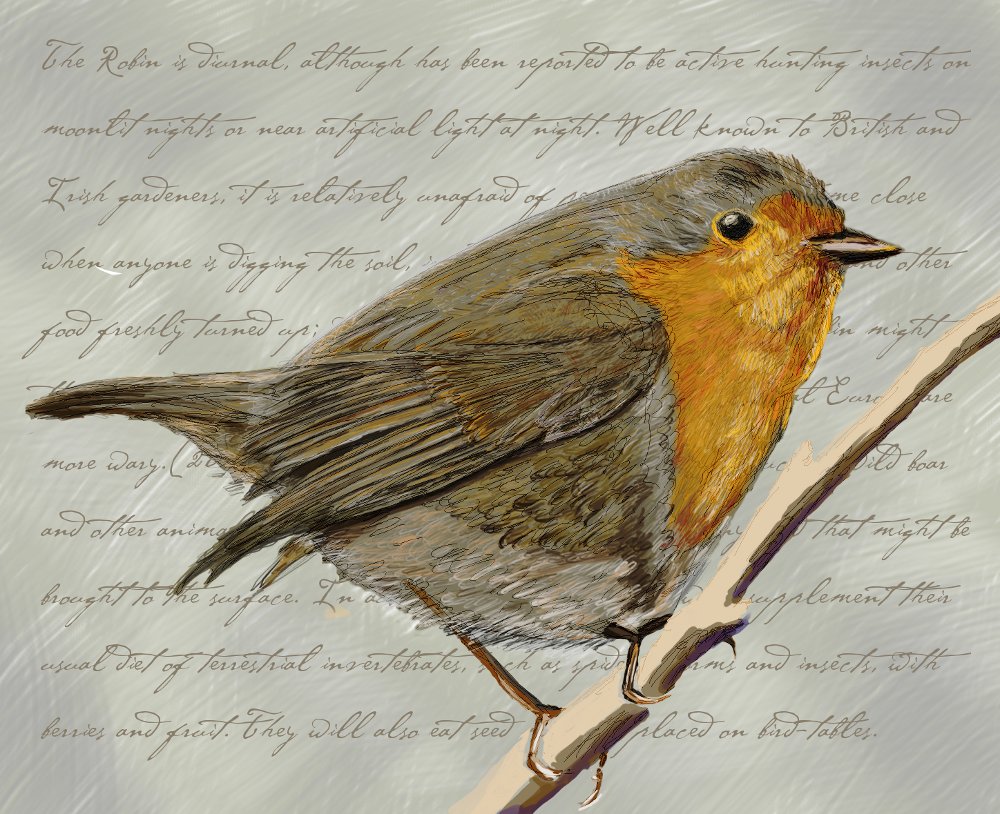
This image was created with Mypaint a free software program that runs on Linux, MacOS X and Windows. The texture of the paper was created from a sample of watercolor paper Shoeller.
Mypaint and Gimp
are a number of years that this computer work and research on digital painting began in 1990 when I acquired my first computer. I have used many operating systems from DOS, through Windows and Apple environments (MacOS and MacOS X). Since 2003, I mostly use free operating systems, Linux, mainly the distribution called Ubuntu (I find it a very friendly and suitable for my creative work). on Linux (and now also on others such as Windows and MacOS X), there are two applications for scenic painting and 'digital processing, and Mypaint Gimp. Mypaint
is a great application for digital painting, has an essential and innovative methods to create and manage brush.
Gimp is a program created as a package for photo editing but lately is being used by many artists in the digital painting (digital painting). Gimp has a nice form for the creation of brushes and pencils. To do this it has two methods, one based on the physical description of the brush (statically) and placed on another image rasters, called dynamic. In both cases the brushes buy a lot of dynamic effects in the form rendered by the 'brush dynamics' (pressure, velocity and random).
1 - digital brushes (gimp and mypaint)
research based on digital brushes Gimp is started up in 2008 (but with some interruptions and changes of mind). Initially I looked closely at how the dynamic array of brushes in gimp. Brushes can be very complex in terms of construction and, in fact I have created several types, watercolors, acrylics and oil and to some designed to woodcut. Recently I started to remove the meat and to simplify many concepts, trying to figure out how to get the desired effect with minimum effort and maximum economy in the construction of brushes. I produced a series devoted to this exercise with pencils and I managed to get an excellent match with real pencils, high-performance relation to the preparation traits as a draw to your computer. Keep in mind that if the brush is complex, it takes a long processing time to the computer, and this produces a kind of waiting while a draw. With the application Mypaint brushes are all a beautiful and dynamic use of the processing algorithm based on a simple circle, on which we can give reps, speed, randomness, etc.., Added to these basic calculations are a kind of dynamic filters which are static and can be used to create an extensive range of brushes and effects that emulate many painting techniques. Mypaint you can work with virtually infinite on a frame, which is very pleasing to me, useful when being made of quick sketches or ideas while you search for the doodles. lot of work done to your computer with these brushes were commissioned illustrations from magazines or publishers. It is my intention to create a series of works and pictorial compositions, a kind of reinterpretation of the American artist Mark Rothko, using the last set of pencils and crayons to create gimp.
Examples of strokes of the brush dedicated to pencils and crayons
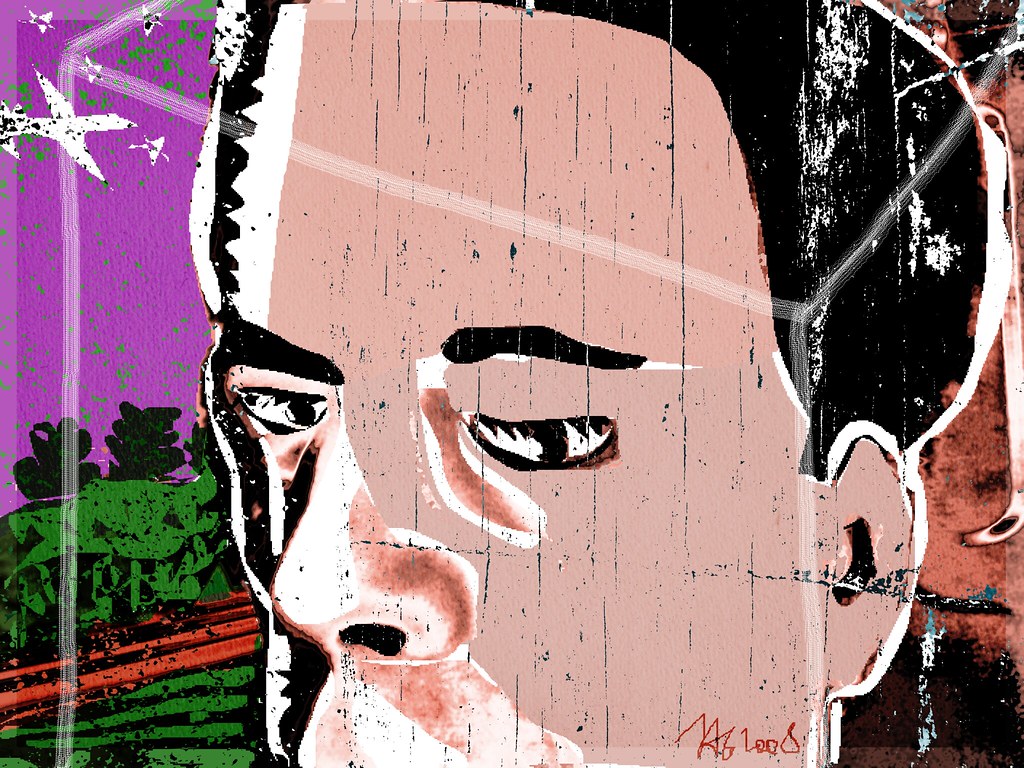
Examples of work done with these digital brushes
2 - Digital Collage
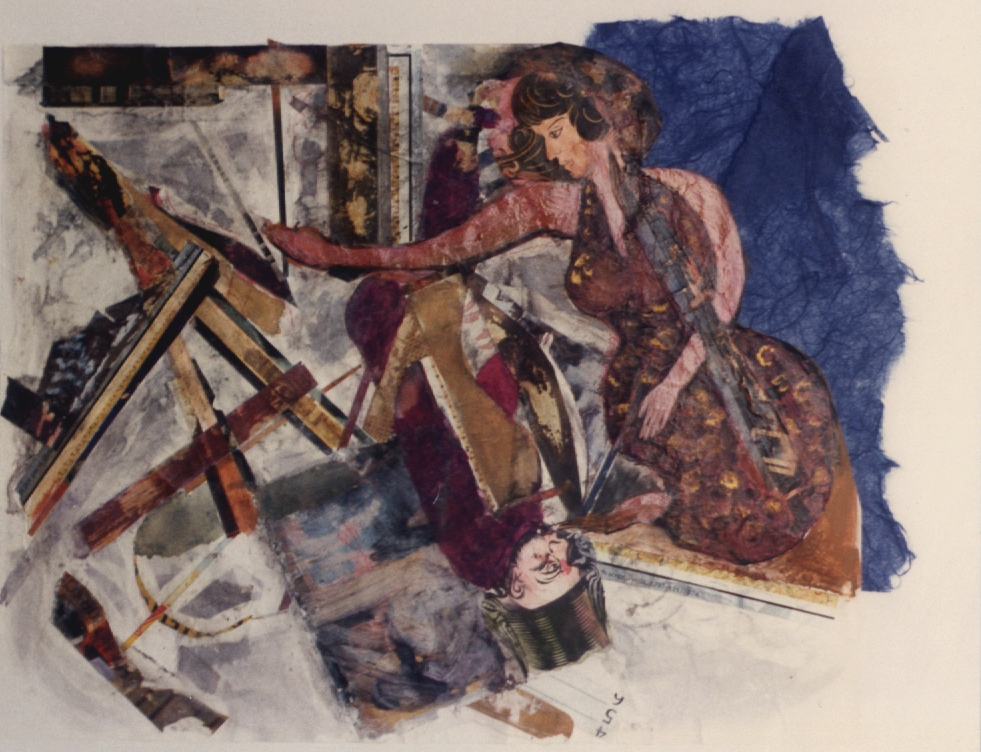
the end of 2008, I started some experiments digital collage, my idea is to make less clear and perfect this technique to compute, resulting in cuts similar to those obtained when ripping the paper with your hands. The cutout of a figure, they also poison, leaves more vivid the image, the paper is cut so thin and irregular edge of paper without color. I developed the methodology required to yield this result, but still there are few examples of this technique to computer ... but there are some details of the methodology that I would like to return to simplify the process easier and more intuitive. Examples of a series of collages made in 1997.
Examples of digital collage
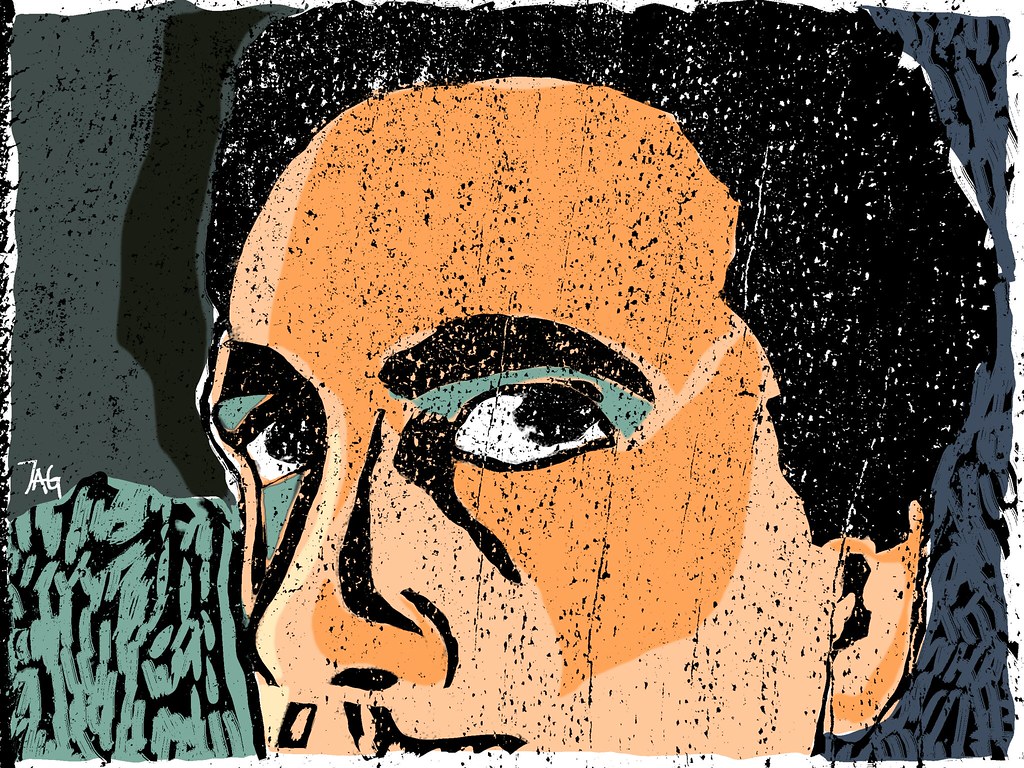
3 - Digital Woodcut
this research I began in March 2008 and wanted to propose the technique to the computer. I created some digital chisels that mimic the effect and uncertainty Cut on the matrix. The research also revived for the digital matrix, where I studied a method to create the textures of different types of wood. The images that I managed to make me look totally convincing without falling into clichés drawing on the computer, to rely on plug-ins or special filters. What I find particularly interesting combination of digital techniques and traditional techniques of etching, dry point as the ... for now we are only all'abbozzo of this methodology. It would be interesting the contrast between the techniques of monotype and intaglio printing such as digital ... where we have single copy versus series. Examples of some works for this Technical
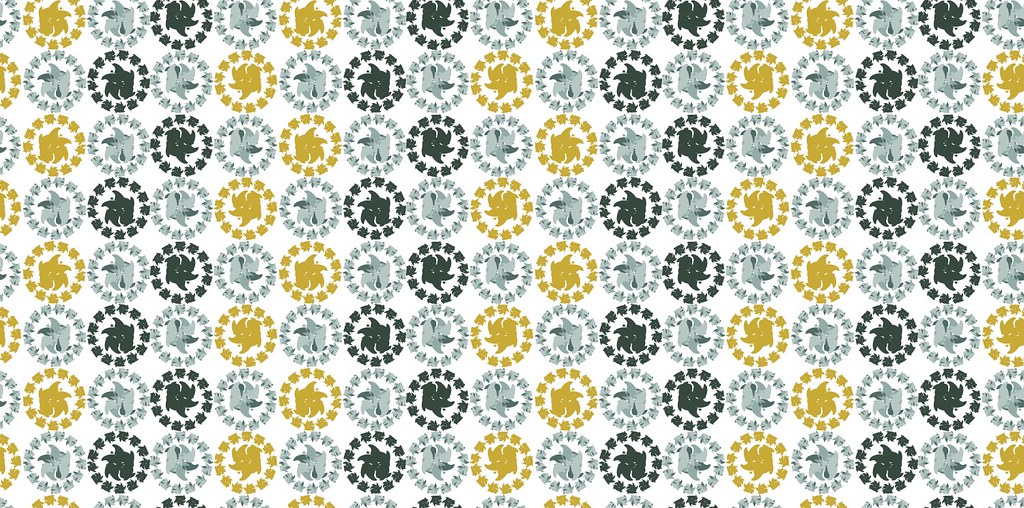
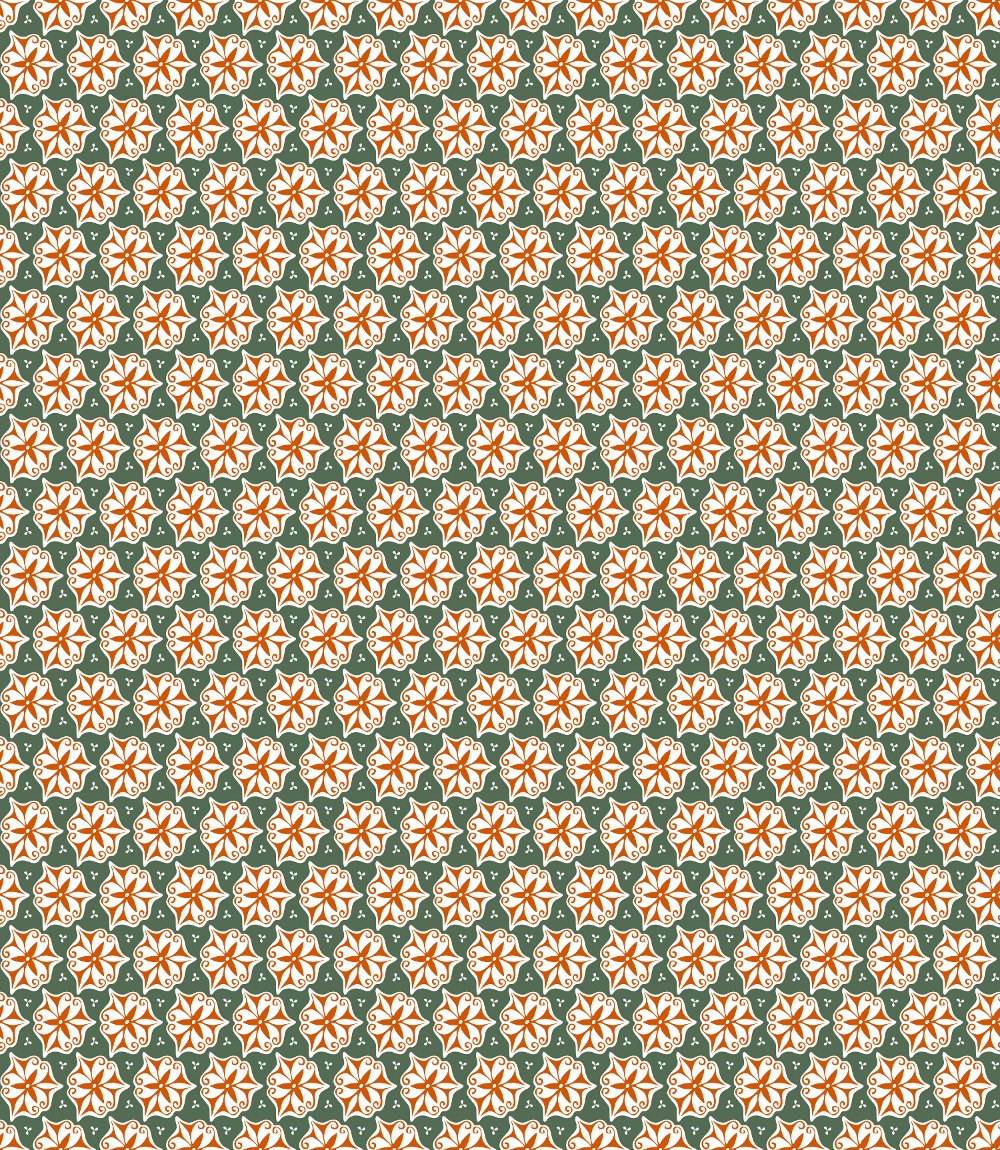
4 - Study on patterns (textures)
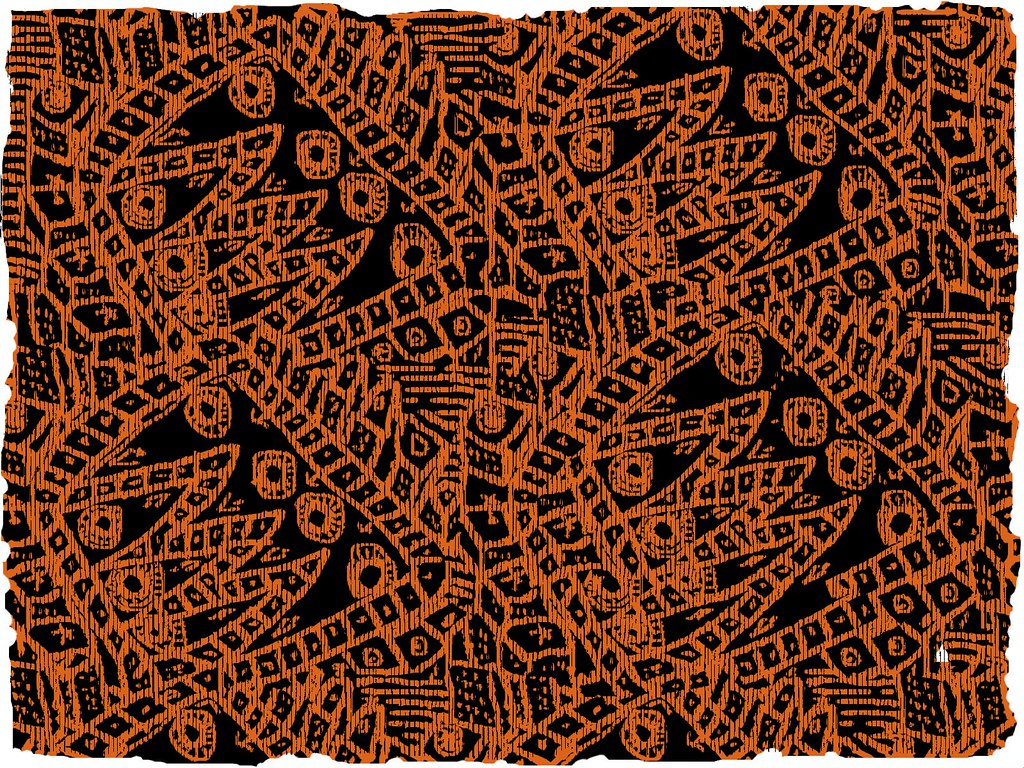
Since 2009, at times, come on I'm interested in pattern (textures). The textures are present everywhere and in all cultures. With the Internet you can find an extensive bibliography of books on the topic. Recently I am an artist and Slovenian Maja B. Jancic, we've created a Facebook group devoted to this subject, I have included a bibliography of books references on patterns (William Morris, Lewis F. Day, and many others). Very interesting is the mathematical aspect of the thing in which I am particularly interested in examining. For the moment I do not have a precise idea on the outlets of this type of research will certainly be part of a series of works, to say real, I'll just pretend to make my studio ready.
Studies and patterns made on the basis of this research
5 - Birds and Printing
In 2008 I began to research whether a Birds combined with typography, I wrote a few things about it and you can find in these links: 1. Project birds - the basics 2. Methodology and applications
The idea is to create a typeface (font) that can be used as a pattern or texture fill geometric shapes ... in my case are figures that can represent the birds. My research work has been largely inspired by the work of the great American artist Charley Harper. The different stages of this research will be exposed as a process, starting from a classical representation and gradually produce the deconstruction of the subject and produce a sui generis using the font created for this purpose.
6 - Self-Portraits Flickr Group
In 2009 I started to join the group dedicated to the self-portrait and founded by Brazilian artist, René Tomczak. Now I am the administrator of the group through the group and I met several artists, art teachers and lovers of painting. Recently, one of the artists, Julia Kay, he founded a group where group members are free of portraits of their members ... really a very interesting job. The group currently has about 80 participants and works with 380 ... in the future I would like to present the work of artists in a book published by the group.
http://www.flickr.com/groups/auto-retratos/
References
the extent of my ability to search for every time I would put its references.
Many years ago, when I went again the Academy of Fine Arts in Bologna, ran the year 1986, I had been thinking how it would be the artist of the future. I remember a discussion in the corridors of the Academy with Yuji and I imagine painting with light tools, computers and things like ... certainly the computer and software have made great strides and now you can draw and paint to your computer. Probably the tools and interfaces will improve and get closer to the process of creation. But this process should be as close to the art world, without too much jargon and more practical sense. Today's graphics tablets have become a true display of light where we can draw and paint directly onto the canvas. But unfortunately the software is too complex to master, in my opinion because they use a metaphor of the beginnings of man-machine ... we would see the future.
This image was created with Mypaint a free software program that runs on Linux, MacOS X and Windows. The texture of the paper was created from a sample of watercolor paper Shoeller.
Mypaint and Gimp
are a number of years that this computer work and research on digital painting began in 1990 when I acquired my first computer. I have used many operating systems from DOS, through Windows and Apple environments (MacOS and MacOS X). Since 2003, I mostly use free operating systems, Linux, mainly the distribution called Ubuntu (I find it a very friendly and suitable for my creative work). on Linux (and now also on others such as Windows and MacOS X), there are two applications for scenic painting and 'digital processing, and Mypaint Gimp. Mypaint
is a great application for digital painting, has an essential and innovative methods to create and manage brush.
Gimp is a program created as a package for photo editing but lately is being used by many artists in the digital painting (digital painting). Gimp has a nice form for the creation of brushes and pencils. To do this it has two methods, one based on the physical description of the brush (statically) and placed on another image rasters, called dynamic. In both cases the brushes buy a lot of dynamic effects in the form rendered by the 'brush dynamics' (pressure, velocity and random).
1 - digital brushes (gimp and mypaint)
research based on digital brushes Gimp is started up in 2008 (but with some interruptions and changes of mind). Initially I looked closely at how the dynamic array of brushes in gimp. Brushes can be very complex in terms of construction and, in fact I have created several types, watercolors, acrylics and oil and to some designed to woodcut. Recently I started to remove the meat and to simplify many concepts, trying to figure out how to get the desired effect with minimum effort and maximum economy in the construction of brushes. I produced a series devoted to this exercise with pencils and I managed to get an excellent match with real pencils, high-performance relation to the preparation traits as a draw to your computer. Keep in mind that if the brush is complex, it takes a long processing time to the computer, and this produces a kind of waiting while a draw. With the application Mypaint brushes are all a beautiful and dynamic use of the processing algorithm based on a simple circle, on which we can give reps, speed, randomness, etc.., Added to these basic calculations are a kind of dynamic filters which are static and can be used to create an extensive range of brushes and effects that emulate many painting techniques. Mypaint you can work with virtually infinite on a frame, which is very pleasing to me, useful when being made of quick sketches or ideas while you search for the doodles. lot of work done to your computer with these brushes were commissioned illustrations from magazines or publishers. It is my intention to create a series of works and pictorial compositions, a kind of reinterpretation of the American artist Mark Rothko, using the last set of pencils and crayons to create gimp.
Examples of strokes of the brush dedicated to pencils and crayons
Examples of work done with these digital brushes
the end of 2008, I started some experiments digital collage, my idea is to make less clear and perfect this technique to compute, resulting in cuts similar to those obtained when ripping the paper with your hands. The cutout of a figure, they also poison, leaves more vivid the image, the paper is cut so thin and irregular edge of paper without color. I developed the methodology required to yield this result, but still there are few examples of this technique to computer ... but there are some details of the methodology that I would like to return to simplify the process easier and more intuitive. Examples of a series of collages made in 1997.
Examples of digital collage
this research I began in March 2008 and wanted to propose the technique to the computer. I created some digital chisels that mimic the effect and uncertainty Cut on the matrix. The research also revived for the digital matrix, where I studied a method to create the textures of different types of wood. The images that I managed to make me look totally convincing without falling into clichés drawing on the computer, to rely on plug-ins or special filters. What I find particularly interesting combination of digital techniques and traditional techniques of etching, dry point as the ... for now we are only all'abbozzo of this methodology. It would be interesting the contrast between the techniques of monotype and intaglio printing such as digital ... where we have single copy versus series. Examples of some works for this Technical
Since 2009, at times, come on I'm interested in pattern (textures). The textures are present everywhere and in all cultures. With the Internet you can find an extensive bibliography of books on the topic. Recently I am an artist and Slovenian Maja B. Jancic, we've created a Facebook group devoted to this subject, I have included a bibliography of books references on patterns (William Morris, Lewis F. Day, and many others). Very interesting is the mathematical aspect of the thing in which I am particularly interested in examining. For the moment I do not have a precise idea on the outlets of this type of research will certainly be part of a series of works, to say real, I'll just pretend to make my studio ready.
Studies and patterns made on the basis of this research
In 2008 I began to research whether a Birds combined with typography, I wrote a few things about it and you can find in these links: 1. Project birds - the basics 2. Methodology and applications
The idea is to create a typeface (font) that can be used as a pattern or texture fill geometric shapes ... in my case are figures that can represent the birds. My research work has been largely inspired by the work of the great American artist Charley Harper. The different stages of this research will be exposed as a process, starting from a classical representation and gradually produce the deconstruction of the subject and produce a sui generis using the font created for this purpose.
6 - Self-Portraits Flickr Group
In 2009 I started to join the group dedicated to the self-portrait and founded by Brazilian artist, René Tomczak. Now I am the administrator of the group through the group and I met several artists, art teachers and lovers of painting. Recently, one of the artists, Julia Kay, he founded a group where group members are free of portraits of their members ... really a very interesting job. The group currently has about 80 participants and works with 380 ... in the future I would like to present the work of artists in a book published by the group.
http://www.flickr.com/groups/auto-retratos/
References
the extent of my ability to search for every time I would put its references.
Subscribe to:
Posts (Atom)